


History of Agricultural Water Capture

Updated: Jul 20

Terracing and Water Capture: Ancient Agricultural Water Management
Water is the lifeblood of agriculture. For thousands of years, civilizations from the Andes to Southeast Asia have contemporaneously captured, conveyed and conserved water effectively. If a hydrologist from 6,000 years ago time travelled to the present, they would say we are beyond the pale irrigating by spraying into the air.
So effective that societies sprang up where there was no natural reason for agriculture as in ancient Mesopotamia. This had an organizing effect. In order for everything to work in synchronicity, the individual had to sublimate to the greater good. Excavation of the Norte Chico civilization has found no weapons.
Ancient Origins of Terracing
The most enduring innovation in this pursuit is terracing—the construction of step-like fields on sloped land to prevent erosion, retain water, and render otherwise unfarmable terrain arable. The universal feature is efficiently delivering the water to the plant roots .
Terracing slows runoff during storms, reduces erosion and flooding and retains water for crops. The basic idea is to transform a hillside into a series of flat platforms, each one supported by walls or embankments. Platforms capture the downward flow of water, allowing it to infiltrate the soil and reduce erosion. Terracing is an example of convergent evolution.
In the Andes Mountains, the Inca Empire built some of the most sophisticated terracing systems in human history. Known as andenes, these terraces stretched for miles and were often equipped with complex irrigation channels and drainage systems. The Incas used them to grow a wide range of crops—potatoes, maize, quinoa—at different altitudes and microclimates, cleverly managing water and maximizing productivity. The general consensus is there were over 1.3 million acres under cultivation in the heyday. The Wari people, likely descendants of the Norte Chico, had sophisticated ways to tap into the constant supply of ice in the Andes.
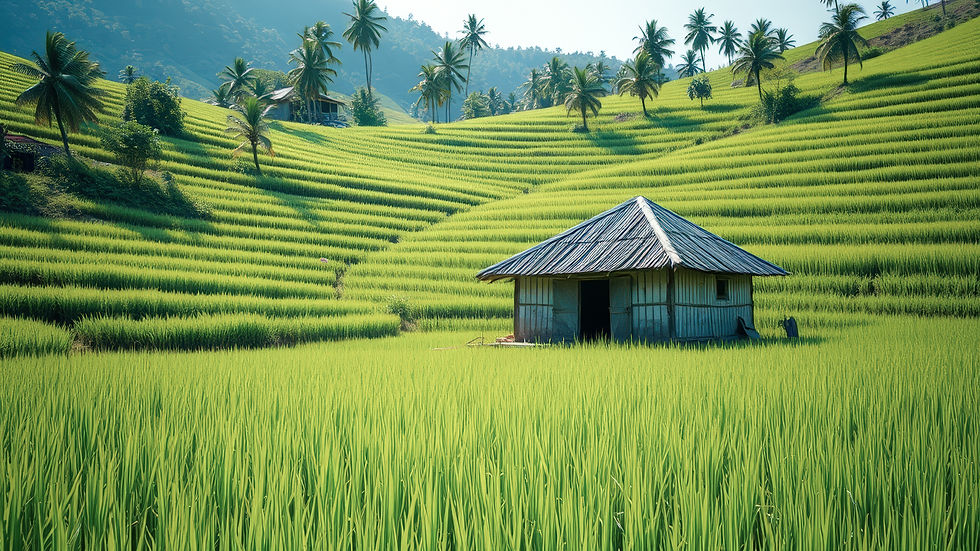
In Asia, terracing has a long tradition as well. The spectacular rice terraces of the Philippines, China, and Vietnam were carved into mountainsides over generations, using gravity-fed irrigation to control the flow of water from terrace to terrace. In these systems, water is not just conserved—it is reused in a cascading cycle which supports both rice and aquatic organisms like fish and snails, creating a sustainable ecosystem.
Terracing was also practiced in the Mediterranean, where Greeks, Romans, and later farmers used stone terraces to cultivate olives, grapes, and grains in dry, erosion-prone hills. Similarly, in the Middle East, ancient civilizations like the Nabataeans of Petra mastered water harvesting by combining terraces with cisterns and catchment systems to capture scant rainfall for agriculture in desert conditions.

The Engineering Behind Terraces
Beyond their visual beauty, terraces are remarkable examples of landscape engineering. Each terrace typically includes a retaining wall, a level planting surface, and often channels or ditches to manage water. By interrupting the downward flow of rainwater, terraces allow moisture to soak into the soil rather than washing away topsoil. This also helps recharge groundwater.
In some cases, terraces are lined with stones that absorb heat during the day and release it at night, moderating temperatures and extending the growing season. Others are built with compacted earth and organic materials that enrich soil fertility. Many ancient terrace systems were maintained communally, with local knowledge passed through generations.
Terracing in the Modern Era
There has been renewed interest in terracing in many parts of the world, especially where water scarcity and land degradation are imminent threats. Development agencies, environmental organizations, and local governments are investing in terrace restoration and training programs. Terracing is especially effective in semi arid and mountainous regions where conventional irrigation is impractical. In Ethiopia, large-scale reforestation and terracing projects have helped reduce erosion and increase agricultural yields. In Nepal and Haiti, NGOs and farming cooperatives are reintroducing terrace farming as a way to improve food security and revive degraded landscapes. Geographic Information Systems (GIS), drones, and satellite imagery help map erosion-prone areas and design more efficient terrace layouts.
Challenges and the Path Forward
Despite its many benefits, implementing or restoring terraces is not without challenges. Building and maintaining terraces is labor-intensive and requires long-term commitment. In some regions, the loss of traditional knowledge has made it difficult to reintroduce these systems effectively. Economic pressures also lead some farmers to favor short-term gains over long-term sustainability. Success stories around the world show that with proper support, terrracing can once again play a central role in food production and land stewardship.
Conclusion
Terraces are more than just remnants of ancient civilizations; they are living systems with the power to meet modern challenges. As the global population grows and climate pressures increase, the need for resilient, water-efficient agriculture is more urgent than ever. Terracing offers a time-tested, low-tech, and highly effective solution.
Whether carved into the mountains of Peru, etched into the hills of Asia, or restored in the drylands of Africa, terraces embody a profound truth: that working in harmony with the land—rather than against it—is the key to enduring food security and ecological balance.



Comments