Joel Longstreth · Jul 7, 2025 · 4 min read
Shifting Drainage Tile Trends
Drainage tile usage is showing no signs of slowing down or saturation — trends, trade-offs, and where smart drainage is headed.
Read the post →
Patented subsurface irrigation · Terra Nova Research
Pivots, wheel lines and flood irrigation lose up to 50% to evaporation. Our subsurface membrane holds water where crops need it — turning sandy soil into high-yield ground.
water lost to evaporation by surface methods
per acre vs. $2,000–$9,000 for pivots
patented improvements over existing devices
maintenance, ever
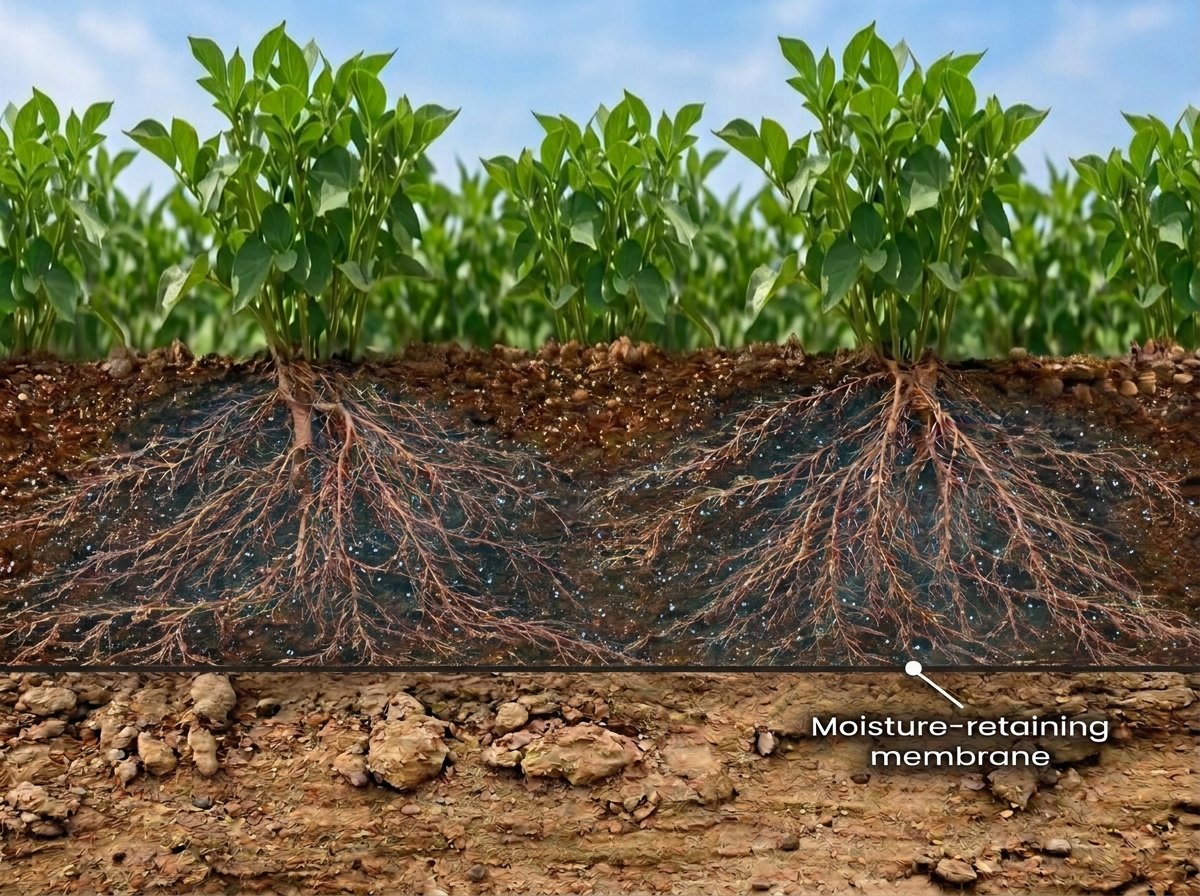
How subsurface water retention works
Drip systems let water percolate straight past the plant down to the water table. Terra Nova's membrane irrigation by subsurface retention lays a barrier beneath the root zone, so rain and irrigation stay available to your crop.
Farmers have sequestered water for millennia — but never at row-crop scale. Our "Bravo" unit makes it practical, and is ready to install on short notice.
Increased yield & farm-gate revenue
Drag the slider to set your acreage.
$1,284 per acre at 50 acres — volume pricing slides from $1,300 at 10 acres to $900 at 1,000+.
Drag the slider — every number updates as you move it.
Measured in published field research: +33% vs. control.
| Typical yield | 35,000 lb/acre |
| Spot price (typical estimate) | $0.40/lb |
| Added yield | +11,550 lb/acre |
Added farm-gate revenue · Tomatoes
$4,620
per acre, every season
Your ROI
| Installation cost ($1,284/acre) | $64,200 |
| Added revenue | $231,000 / season |
| Payback | Under 1 season |
| Revenue to cost | 3.6x |
| Every $1 invested returns about $3.60 in added revenue each season. | |
$1,284/acre at 50 acres (volume pricing).
Before savings on water, energy, seed and fertilizer.
Price: typical U.S. farm-gate estimate. All figures are for reference only — your specific situation may differ. Yield gains from Terra Nova field research summary (2021). Cotton yields: USDA 2024 final county yields, Lubbock County, TX (looked up 09/26/2026); other yields are typical U.S. averages. Your results depend on soil, climate and management.
Water conservation in agriculture
Surface irrigation methods like pivots, wheel lines and flooding can lose up to 50% of their water to evaporation before it ever reaches the crop.
Terra Nova's membrane is water-saving irrigation by design: it holds rain and irrigation water in the root zone, so less water is pumped, less drains away to the water table, and less disappears into the air.
For growers facing drought and tighter water allocations, that means real irrigation water conservation — without giving up yield.
Benefits
Water stays in the root zone instead of draining past it.
Maximize output on the fields you already farm.
Less seed, water, electricity, diesel and fertilizer.
Healthier crops command a higher farm-gate price.
Makes light, fast-draining ground productive.
Eliminates costly deep tillage.
Holds soil and moisture where they belong.
Someday water authorities will choose between farms and towns. Be ready.
Center pivot irrigation cost vs. Terra Nova
Center pivot (from)
$2,000
per acre, plus ongoing energy & maintenance
Terra Nova
$900–$1,300
per acre, sliding scale by acreage
no maintenance — ever
Estimates only. Final price depends on acreage, location and membrane (orchard or row). Try the calculator above to price your acreage.
When crops fail: USDA insurance vs. Terra Nova
Crop insurance covers eligible losses under your policy; MaxYield is designed to retain water in the root zone. Statewide insurance averages are historical context — not your farm's coverage limit or an expected claim payment. Your coverage depends on crop, county, practice, policy plan, approved yield and elected coverage level.
| Crop | Reported liability / net acre | 2024 indemnities / net acre | Illustrative added gross revenue with membrane* |
|---|---|---|---|
| Cotton | $478 | $243 | +$550/acre |
| Corn | $497 | $86 | +$756/acre |
| Grain sorghum | $231 | $53 | +$280/acre |
| Wheat | $153 | $31 | +$286/acre |
| Peanuts | $1,143 | $528 | +$1,040/acre |
| Cucumbers | $692 | $101 | +$1,500/acre |
Texas, 2024 crop year. Statewide averages — not a quote or payment for your farm. Cotton excludes extra-long-staple cotton. Cucumbers represent one specific crop, not vegetables generally.
* Values are illustrative estimates based on published and non-published data. The 100% gains and 25% vegetable gain are scenario assumptions, not published crop-specific trial results. All figures are for reference only — your specific situation may differ.
$900–$1,300
per acre, one time. Sliding scale by acreage.
Insurance and the membrane can work together. MaxYield does not eliminate drought or other crop risks, guarantee a harvest, or replace crop insurance. Discuss your own coverage with a licensed crop insurance agent.
Milestones
2024
The Alpha unit literally hit concrete in testing — and the plot still proved the concept.
July 2025
Sneak preview for growers in Lubbock, TX, covered by local news.
April 2026
Major sponsor of the PCG conference. Member, Utah Farm Bureau.
About Terra Nova Research
Terra Nova Research is bridging the gap between non-scalable academic research and real agricultural needs — bringing water conservation to over 5 billion acres of sandy soil worldwide.
B.S. Engineering, General Motors Institute. M.S. Engineering, University of Michigan. Trained at Toyota in Japan and a Shingo Prize recipient. A 40-year manufacturing career spanning 58 countries.
As seen on KCBD NewsChannel 11, Lubbock
“The goal is to transform West Texas agriculture by taking sandy soils and giving them a much higher water holding potential — whether it’s rainfall or irrigation.”
Subsurface drip lets water percolate past the roots down to the water table. Our membrane sits below the root zone and holds water where plants can use it.
We bring the Bravo unit and the membrane. You provide the tractor and labor. Row crops and orchards both supported.
None. It's a one-time capital investment designed to pay off for generations.
Center pivots start around $2,000 per acre and can reach $9,000, plus ongoing energy and maintenance. Terra Nova's underground irrigation membrane runs $900–$1,300 per acre with no maintenance.
$1,300 per acre at 10 acres, dropping steadily to $900 per acre at 1,000 acres or more. Final price depends on acreage, location and membrane required. Contact us for a quote.
Questions, acreage, or just curious? Send a note — our team reads every message.
From prototype to field


From Terra Nova Research
Joel Longstreth · Jul 7, 2025 · 4 min read
Drainage tile usage is showing no signs of slowing down or saturation — trends, trade-offs, and where smart drainage is headed.
Read the post →Joel Longstreth · Jul 4, 2025 · 4 min read
From Andean terraces to Petra: how ancient civilizations captured, conveyed and conserved water — and what it teaches modern growers.
Read the post →Joel Longstreth · Jun 18, 2025 · 2 min read
Genetic uniformity, policy failure and the persistence of Malthusian thinking — what the famine still teaches about food security.
Read the post →Joel Longstreth · Jun 16, 2025 · 2 min read
It took millennia to create and about a century to deplete. The Ogallala Aquifer is West Texas at a crossroads.
Read the post →How the averages are calculated. Each insurance figure is total reported dollars divided by share-adjusted net reported acres (reported acres × insured ownership share), rounded to the nearest dollar. Totals include all reported plans and coverage levels, including applicable supplemental plans that may cover the same land. They are not base-policy-only figures or averages across unique physical acres.
What the averages do not tell you. Insurance averages are not individual policy guarantees. Indemnities include covered causes of loss, not drought alone; revenue policies can also cover qualifying price declines. A statewide average includes insured acres with no payment and does not describe the average payment to a grower who filed a claim.
The membrane column. Insurance and added crop revenue measure different things. The membrane column is an illustrative annual gross-revenue scenario, not net profit, a guaranteed yield gain or an insurance benefit; it excludes additional production costs and does not predict how insurance payments may change. Actual results depend on soil, crop, weather and management.
Assumptions behind the membrane examples. Cotton 748 lb × $0.70/lb × 105% (irrigated scenario); corn 180 bu × $4.20/bu × 100%; sorghum 70 bu × $4.00/bu × 100%; wheat 52 bu × $5.50/bu × 100%; peanuts 4,000 lb × $0.26/lb × 100%; cucumbers 20,000 lb × $0.30/lb × 25%. Cotton's insurance average blends irrigated and dryland coverage, unlike its membrane example. The vegetable example represents cucumbers only. These fixed prices are not live spot quotes from the calculator.
Source. USDA RMA 2024 Summary of Business data (ZIP), checked October 19, 2026. Policy details: USDA RMA insurance plans.